By Rick | rentinholland.nl | Last checked: 29 September 2026
How much can your rent rise in the Netherlands in 2026? The standard limits are 4.1% for social housing from July, 6.1% for mid-range rentals and 4.4% for the free sector. The right limit and objection route depend on your rental sector and contract. Here is what to check before you respond.
Having worked in the Dutch housing industry for years, I have seen landlords propose increases that exceeded the legal maximum more often than you might expect. Sometimes it is intentional, sometimes it is a genuine miscalculation. Either way, the result is the same: you end up paying more than you should. A rent increase Netherlands issue is one of the most common problems expats run into during their tenancy. This guide gives you the knowledge to prevent that. If you are new to renting in the Netherlands, I recommend starting with our complete guide to tenant rights for the full picture.
Maximum Rent Increase Netherlands Limits in 2026
The Dutch government sets maximum rent increase percentages every year. For 2026, the limits depend on which rental category your home falls into.
| Rental category | Maximum increase 2026 | In effect from |
|---|---|---|
| Social housing (sociale huur) | 4.1% | 1 July 2026 |
| Mid-range / regulated (middenhuur) | 6.1% | 1 January 2026 |
| Free sector (vrije sector) | 4.4% | 1 January 2026 |
For social housing, the 2025 maximum of 5% still applies until 1 July 2026.
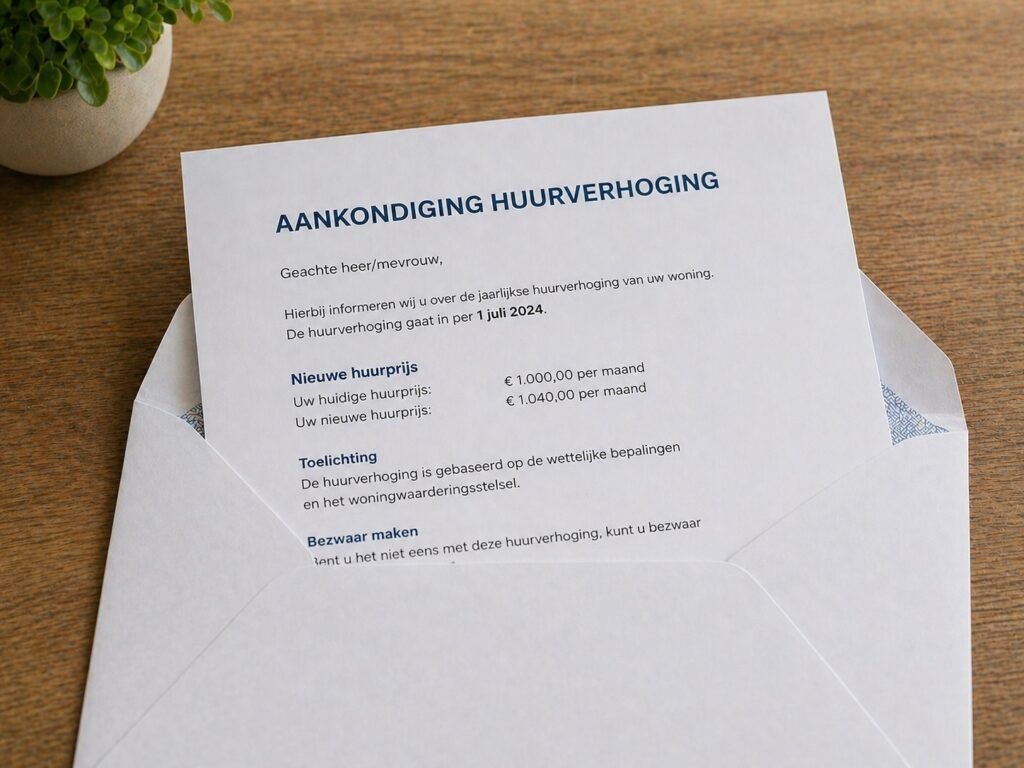
Social housing (sociale huur): the standard maximum is 4.1% from 1 July 2026. For self-contained social homes with a basic rent below €350, a maximum €25 monthly increase can apply instead. Income-dependent increases are another exception. Rooms have a 4.1% limit. See the government explanation and exceptions.
Mid-range rental (middenhuur): the annual limit is 6.1% in 2026. A lower increase agreed in your contract remains the limit; the statutory maximum does not itself create a right to increase the rent.
Free sector (vrije sector): the annual limit is 4.4% in 2026. Check the increase clause in your contract: a lower contractual increase takes precedence. The Huurcommissie explains the contract-based rules for mid-range and free-sector tenancies.
Your sector depends on factors including the start date and initial basic rent of your contract, not just today’s rent or points total. Check the official sector guide. Increases after home improvements have separate rules.
Not sure which category your home falls into? Use our guide on how to check if your rent is too high to calculate your WWS points and find out.
How the Rent Increase Process Works
Your landlord cannot simply raise the rent without following a specific legal process. Here is what the law requires.
Social housing uses a written proposal. It should include the old and new basic rent, the increase, the effective date and how to object. An income-dependent proposal also needs the income indication.
Social housing: at least two months’ notice. This rule also applies to rooms. Do not assume it applies in the same way to mid-range or free-sector contracts: check the increase clause and the rules for your sector.
Usually once per twelve months. Exceptions can apply, including certain first-year social-housing increases, an earlier postponed social-housing increase and separate home improvements. Check the official timing rules before relying on the twelve-month rule.
The increase applies to the base rent only. The increase percentage applies to your kale huur (bare rent), not to service charges. Service charges have their own rules and must be accounted for separately.
What to Check When You Receive a Rent Increase
When you receive a rent increase proposal, do not just accept it. Take five minutes to check the following.
Is the increase within the applicable maximum? Check your sector, the effective date and any permitted social-housing exception. For mid-range and free-sector homes, compare it with the contract as well.
Was the correct procedure followed? For social housing, check the written proposal and two-month notice period. For mid-range and free-sector homes, check the contractual increase clause.
When was your previous increase? Check the annual timing rule and whether a specific exception applies.
Is your rent regulated by WWS points? Where a points-based maximum applies, check the proposed new rent against it. Do not automatically apply that ceiling to a free-sector contract.
Is the social-housing proposal complete? Save the proposal and identify any missing information in your written objection. Ask for advice if the landlord disputes the effect of a defect.
Want to check what your contract actually says about rent increases? Our Dutch rental contract checklist explains exactly what to look for in your lease, including whether your rent increase clause is legally valid.
Income-Dependent Rent Increases
Income-dependent increases apply to qualifying self-contained social housing, not to mid-range rentals. They use a fixed amount instead of the standard percentage increase.
For 2026, the assessment uses household income from 2024. The income category and household composition matter. Consult the Huurcommissie income-dependent increase rules for the applicable evidence and exceptions.
Depending on the income category, the permitted increase is up to €50 or €100 per month. These amounts are not added on top of the standard percentage increase, and the applicable points-based maximum rent still matters.
Use the official 2026 income table to check your household’s category and threshold.
An exemption for disability or chronic illness requires specific conditions; it is not automatic for every affected household. For resident children under 23, an income deduction applies rather than excluding all their income.
Your landlord must request your income data from the Belastingdienst (Tax Authority) to apply this increase. If they have not done this, they cannot apply an income-dependent increase.
How to Object to a Rent Increase
If you believe the proposed increase is too high or otherwise illegal, you have the right to object. Here is the step-by-step process.

Using a Dutch letter. The letter template contains Dutch wording with an English translation to help you understand it. Choose the paragraphs that match your case and check the current official procedure below. A template does not guarantee that an objection succeeds. Our Huurcommissie guide explains the broader process.
Step 1: Identify your sector and deadline. Keep the increase notice, contract and payment records. Do not stop paying rent. The correct response and treatment of the disputed increase depend on your sector and procedure; seek advice if unsure and set aside the disputed amount.
Step 2: Send a written objection to your landlord. Write a letter or email to your landlord explaining why you disagree with the increase. Be specific: state the legal maximum, point out any errors in the calculation, or explain why the notice was not valid. Keep a copy of everything.
Step 3: Follow the correct Huurcommissie route. For a social-housing proposal, object to the landlord in writing before the increase takes effect. If the landlord maintains the proposal after a timely objection, the landlord normally has six weeks after the effective date to ask the Huurcommissie for a decision. If you missed the written objection deadline or received a registered reminder, a different route applies. Follow the official social-housing procedure promptly.
Mid-range and free sector: four months. If a contract-based annual increase exceeds the legal or agreed maximum, the tenant can ask the Huurcommissie to assess it within four months after the increase date. A letter to the landlord does not replace that application. Check the official contract-based procedure.
Need a starting point for your letter? The rent increase objection template includes editable Dutch wording and an English translation. Check the official deadlines above before using a template, and keep only the objection grounds that apply to you.
For a complete guide on how the Huurcommissie works, read our step-by-step Huurcommissie guide.
Service Charges: Different Rules
Service charges (servicekosten) are separate from your base rent and follow different rules. It is important to understand the distinction because some landlords try to shift costs from rent to service charges to get around rent controls.
Service charges cover agreed services such as shared utilities and cleaning of common areas. Ownership and major maintenance costs cannot simply be passed on as service charges. Read our service charges guide to check a breakdown.
Service charges are not an alternative way to impose an annual basic-rent increase. Ask for the itemised annual statement and supporting documents. The available dispute procedure depends on your tenancy.
Keep service charges separate from basic rent when checking an increase or discussing a dispute.
Rent Harmonisation: What Happens When a New Tenant Moves In
Rent harmonisation (huurharmonisatie) is the practice of adjusting the rent when a property gets a new tenant. This is separate from the annual increase and is worth understanding if you are about to sign a new lease.
A new tenancy has its own starting-rent rules. A points-based ceiling applies where the home falls within regulated rent rules; genuinely free-sector starting rents are not subject to the same ceiling. Do not confuse a new starting rent with the annual increase on an existing contract.
This is why it is so important to check your WWS points when you move into a new property. Your landlord may have set the initial rent at or near the maximum, but if they calculated the points incorrectly, you could be overpaying from day one. Use the Huurprijscheck tool on the Huurcommissie website to verify this.
Since 2025, landlords are required to provide new tenants with a full breakdown of the property’s WWS points and the corresponding maximum rent before signing the contract. If your landlord did not provide this, that is a red flag.
Common Mistakes Expats Make with Rent Increases
From my experience, these are the most common rent increase Netherlands mistakes I see expats make. Avoiding them can save you hundreds of euros.
Accepting every increase without checking. Many expats assume the landlord’s calculation is correct and simply start paying the higher amount. Always verify the percentage against the legal maximum.
Not knowing which category their home falls into. The maximum increase differs significantly between social (4.1%), mid-range (6.1%), and free sector (4.4%). If you do not know your category, you cannot check the increase.
Missing the objection deadline. If you wait too long to object, you lose your right to challenge the increase through the Huurcommissie. Act quickly once you receive the notice.
Confusing service charges with rent. Some landlords increase service charges significantly while keeping the rent increase within limits. Check both amounts carefully and request a breakdown.
Applying the wrong payment advice. Do not treat withholding an increase as a universal rule. Get advice on your sector and keep the disputed amount available in case the increase is upheld.
Not keeping the rent increase letter. Always save the original notice. You will need it if you file a complaint with the Huurcommissie.
A Quick Checklist When You Receive a Rent Increase
- Check which rental category your home falls into (social, mid-range, or free sector)
- Verify the proposed percentage against the 2026 maximum (4.1%, 6.1%, or 4.4%)
- For social housing, check the two-month notice period; otherwise check your contractual increase clause
- Check when your rent last increased and whether a timing exception applies
- Where a WWS rent ceiling applies, check the new basic rent against it
- If the increase is too high, send a written objection to your landlord
- Follow the Huurcommissie route for your sector and record the correct application deadline
Final Thoughts
A rent increase does not have to be a stressful event. In most cases, your landlord will propose an increase that is within the legal limits, and you can simply accept it. But when the increase is too high, Dutch law gives you clear and effective tools to push back.
The key is knowing your rights and acting quickly. Check the numbers, send a written objection if needed, and do not hesitate to involve the Huurcommissie. The system is designed to be accessible, even for expats who are new to the Netherlands.
Knowing the rent increase Netherlands rules is the difference between losing hundreds of euros every year and pushing back successfully.
Want to check if your current rent is already too high? Use our guide to checking your rent. Dealing with deposit issues? Read our rental deposit guide.
Rick is a housing expert based in the Netherlands with years of hands-on experience in property management. He created rentinholland.nl to help expats navigate the Dutch rental market with confidence.
Related Articles
- Tenant Rights in the Netherlands: Complete Expat Guide (2026)
- Is Your Rent Too High? How to Check in the Netherlands
- Service Charges in the Netherlands: What Tenants Need to Know
- How to File a Complaint with the Huurcommissie
- Rental Deposit Rules in the Netherlands
- Dutch Rental Contract Checklist: What Every Expat Must Check
- Temporary Rental Contracts in the Netherlands: What Expats Should Know
- The Affordable Rent Act: New Dutch Rental Law (2026)
Frequently asked questions
How much can my landlord raise my rent in 2026?
The standard 2026 limits are 4.1% for social housing from 1 July, 6.1% for mid-range rentals and 4.4% for the free sector. Social-housing exceptions and lower contractual increases can apply.
How often can my rent be increased?
Usually once per twelve months, but there are exceptions. Notice requirements depend on your rental sector and contract.
Can I object to a rent increase?
Yes. For social housing, submit your written objection before the proposed increase takes effect and follow the relevant procedure. For a contract-based mid-range or free-sector increase, the Huurcommissie application deadline is four months after the increase date.
When does the annual rent increase take effect?
For social housing the standard date is 1 July. In the free sector it depends on your contract, often the anniversary of when your tenancy started.
Need to take action? We have ready-made legal letter templates for expats:
👉 Rent Increase Objection Letter Template
👉 Huurcommissie Complaint Letter Template
👉 Rental Deposit Demand Letter Template
👉 Service Charge Dispute Letter Template
👉 Rental Contract Checklist Template
Letter templates include Dutch wording and an English translation. The rental contract checklist is an English checklist with Dutch terms, not a letter.
Dealing with more than one issue? The Complete Dutch Tenant Letter Kit bundles the four dispute letters (deposit, rent increase, service charges and Huurcommissie) at a lower price than buying them separately.
Useful Links
- Huurcommissie (Rent Tribunal): Object to unfair rent increases
- Juridisch Loket: Free legal advice (Dutch)
- Huurteam Nederland: Free tenant advice (English available)
- Government.nl: Rented Housing: Official rent increase information
- !WOON: Free tenant support in Amsterdam (English available)